
Sand Tray Therapy for Relationship Work
When words aren’t enough, the inner world speaks in images
Many relationship struggles don’t live only in our thoughts — they live in our bodies, emotions, and unconscious patterns shaped long before we had language for them. Sand tray therapy offers a gentle, powerful way to access these deeper layers, especially when working with relationship issues.
In my work, sand tray therapy is used as an experiential approach to help clients see, feel, and understand their relationship patterns — not just talk about them.
-
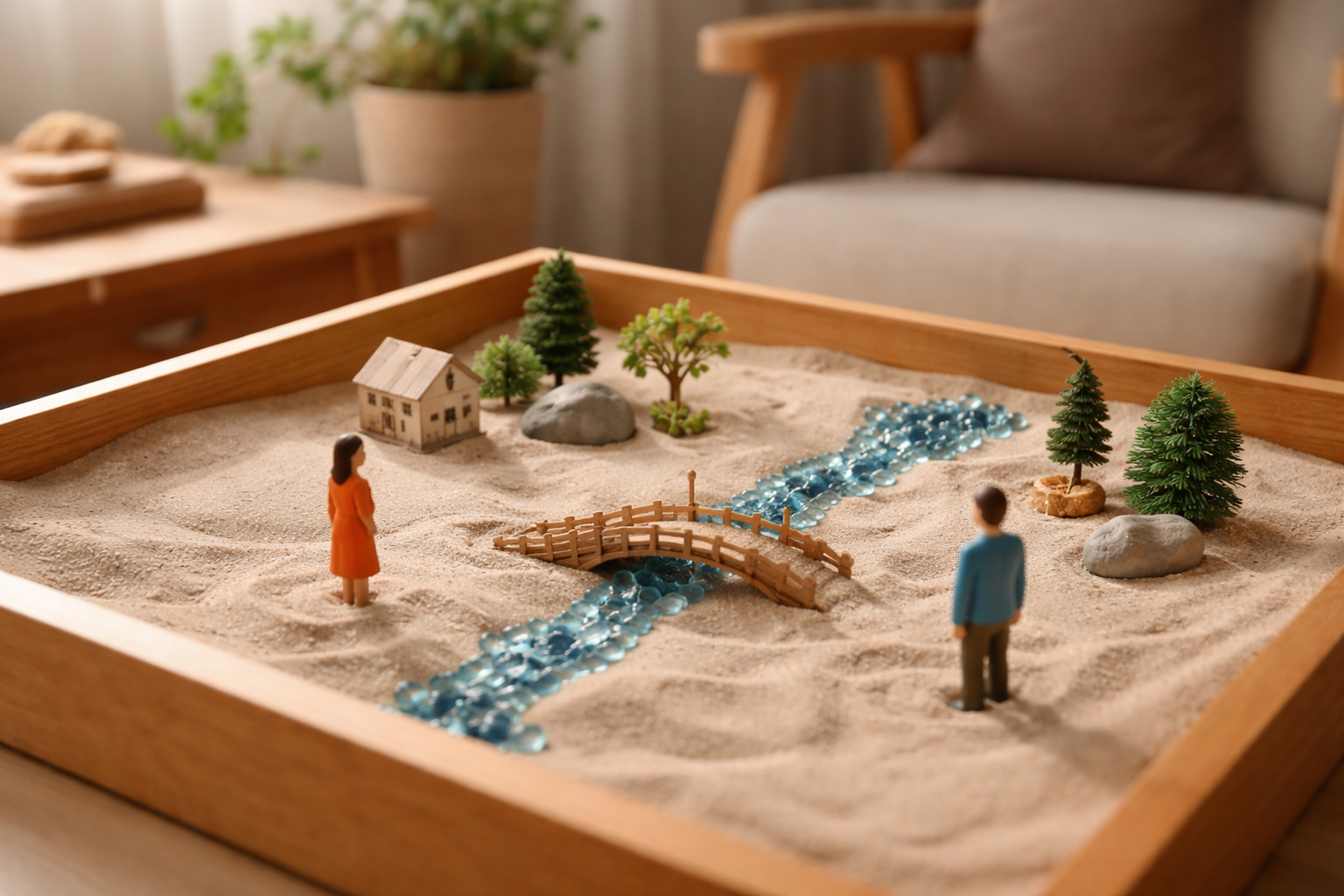
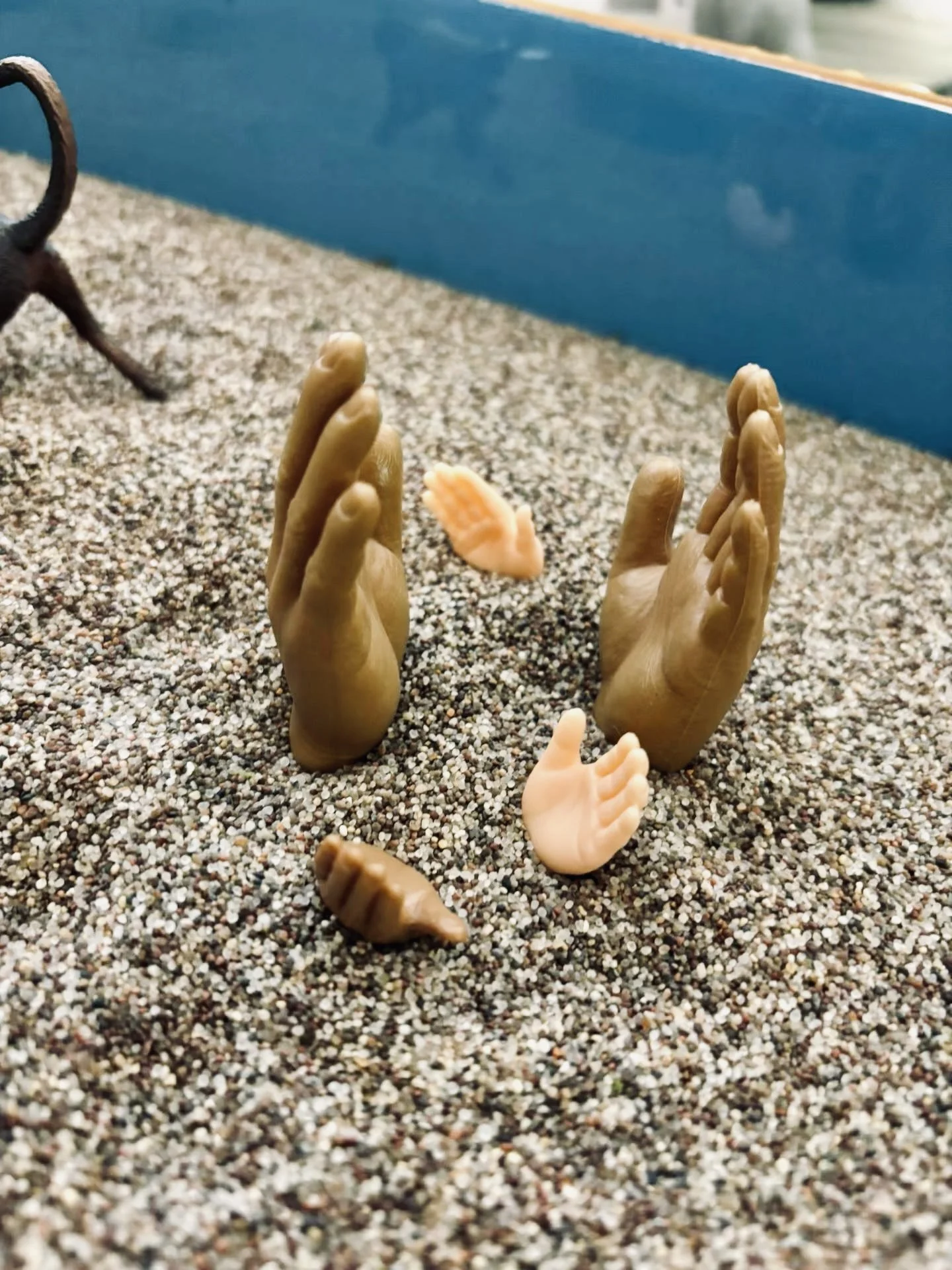
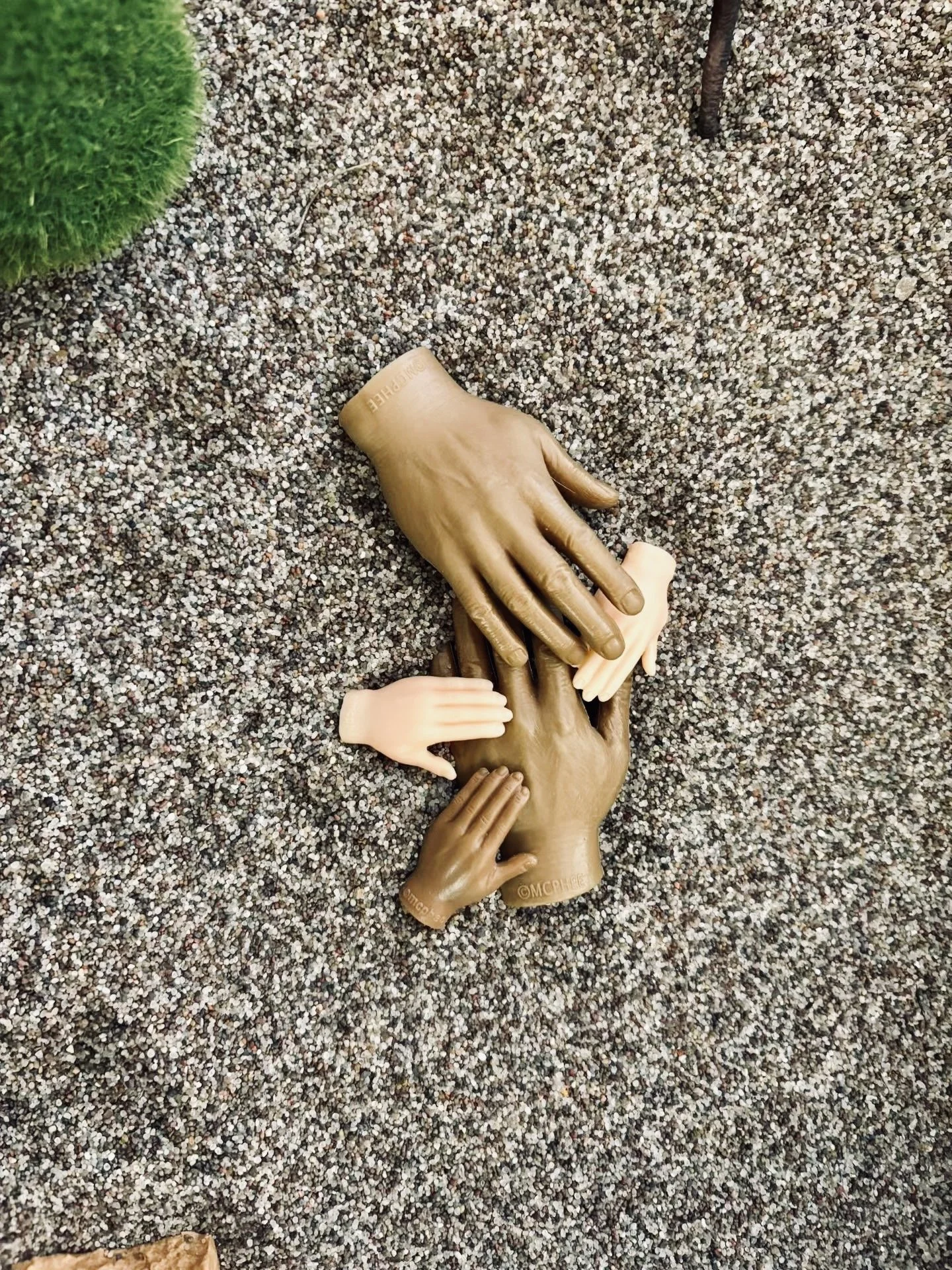
Using a tray of sand and a wide selection of symbolic miniatures, clients are invited to create scenes that represent their inner world, relationships, or emotional experiences. There is no right or wrong way to do this — the process is intuitive, nonverbal, and deeply personal.
-
Relationship wounds are often pre-verbal and relational — formed through experiences of closeness, distance, safety, and rupture. Sand tray therapy works at this same level.
Rather than asking “What’s wrong with me?” clients begin to ask:
What patterns are showing up here?
Where did this dynamic come from?
What does this part of me need?
This shift allows for deeper understanding, emotional regulation, and new relational possibilities — both internally and with others.
-
I take a Trauma-Informed, Client-Centered Approach. Sand tray therapy in my practice is always:
Trauma-informed and paced collaboratively
Respectful of each client’s readiness and boundaries
Integrated with talk therapy, attachment theory, and nervous system awareness
Clients are never forced to interpret or disclose more than they feel comfortable with. The tray becomes a container for meaning, not a demand for explanation.
-
Sand tray therapy can be helpful if you:
Feel stuck in repeating relationship patterns
Struggle to express emotions in words
Feel overwhelmed when talking directly about relational pain
Want a deeper, more embodied way to understand your relationships
No artistic ability or prior experience is needed — just curiosity and openness.